
Rain Cyber
SUPERADMIN
Oct 17, 2026
Discover how Artificial Intelligence is transforming business operations, improving productivity, and helping companies make smarter decisions with RainCyber.
Introduction
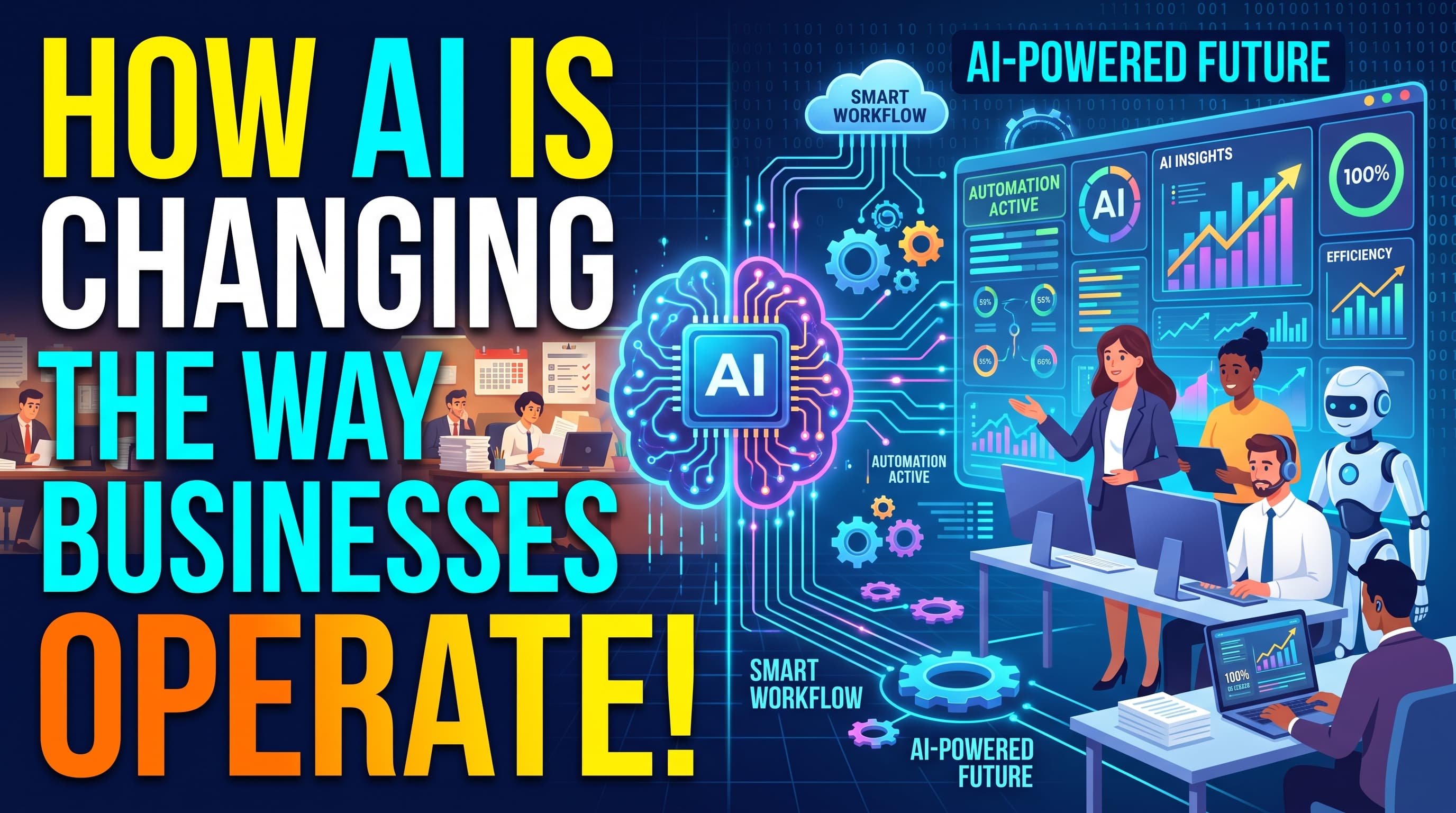
Artificial Intelligence (AI) is rapidly transforming the way businesses operate. From automating repetitive tasks to analyzing large amounts of data, AI helps companies work more efficiently, reduce operational costs, and deliver better customer experiences. Businesses of all sizes are beginning to adopt AI-powered tools to streamline their workflows and stay competitive in an increasingly digital world.
At RainCyber, we believe that embracing modern technology is essential for sustainable business growth. Understanding how AI works and how it can support your business is the first step toward building a smarter, more efficient future.
1. Automating Repetitive Business Tasks
One of the most significant benefits of AI is its ability to automate routine tasks. Many businesses spend valuable time on activities such as data entry, invoice processing, appointment scheduling, report generation, and email management.
AI-powered automation tools can handle many of these tasks with minimal manual intervention. This allows employees to focus on more strategic activities, improve productivity, and reduce the likelihood of human error.
For example, an AI-enabled system can automatically categorize customer inquiries, organize business documents, or generate routine reports. By reducing repetitive work, businesses can save time and use their resources more effectively.
2. Improving Customer Service and Experience
Customer expectations are constantly evolving. People want quick responses, personalized recommendations, and reliable support. AI is helping businesses meet these expectations through intelligent customer service solutions.
AI-powered chatbots and virtual assistants can answer frequently asked questions, provide product information, guide customers through purchasing processes, and offer support outside regular business hours.
AI can also analyze customer preferences and previous interactions to help businesses provide more personalized experiences.
However, human support remains important for complex questions, sensitive situations, and decisions that require empathy. Combining AI automation with human expertise creates a more balanced and effective customer service strategy.
3. Making Smarter, Data-Driven Decisions
Businesses generate enormous amounts of data through sales transactions, customer interactions, marketing campaigns, and daily operations. Analyzing this information manually can be time-consuming and challenging.
AI-powered analytics tools can process large datasets, identify patterns, detect trends, and generate useful insights. These capabilities help business leaders make more informed decisions based on evidence rather than guesswork.
For example, a retail business can use AI to identify popular products, forecast future demand, and recognize changes in customer buying behavior. A service-based company can analyze performance data to identify bottlenecks and improve operational efficiency.
With the right data and analytical tools, businesses can respond to market changes more quickly and develop more effective strategies.
4. Optimizing Sales and Marketing
AI is changing how businesses attract customers, develop marketing campaigns, and increase sales. Instead of relying entirely on broad marketing strategies, companies can use AI to better understand their target audiences.
AI tools can help businesses:
Analyze customer behavior and purchasing patterns.
Segment audiences based on interests and preferences.
Generate and optimize marketing content.
Predict potential customer needs.
Improve advertising performance through data analysis.
Identify promising sales opportunities.
For example, an e-commerce business can use AI-powered recommendation systems to suggest relevant products based on a customer's browsing history and interests.
Although AI can improve marketing efficiency, businesses should review AI-generated content and recommendations to ensure accuracy, originality, brand consistency, and responsible use of customer data.
5. Strengthening Business Operations and Inventory Management
Efficient operations are essential for profitability. Poor inventory control, unexpected supply shortages, unnecessary expenses, and inefficient workflows can negatively affect business performance.
AI can help businesses improve operational planning by forecasting demand, identifying inefficiencies, and analyzing supply chain data.
For retailers and restaurants, AI-assisted inventory management can help predict which products or ingredients will be needed, identify unusual stock movements, and reduce waste.
Manufacturing businesses can use AI to monitor equipment performance and predict potential maintenance needs before costly breakdowns occur.
When integrated with suitable business management systems, these capabilities can improve resource utilization, reduce operational disruptions, and support more consistent service delivery.
6. Enhancing Cybersecurity and Risk Management
As businesses become more digitally connected, cybersecurity becomes increasingly important. AI can support security teams by analyzing network activity, identifying unusual behavior, and detecting potential threats more quickly.
AI-powered security systems may help identify suspicious login attempts, unusual transactions, phishing patterns, and other signs of potentially malicious activity.
These tools can also help security professionals prioritize alerts and investigate incidents more efficiently.
However, AI is not a complete cybersecurity solution. Businesses still need strong access controls, regular software updates, employee security training, reliable backups, and a clear incident response plan. Human oversight is essential because AI systems can produce false alerts or miss certain threats.
7. Supporting Human Resources and Employee Productivity
AI is also changing how businesses manage their workforce. HR teams can use AI-powered tools to organize applications, assist with onboarding, answer employee questions, and automate routine administrative work.
Employees can use AI assistants to summarize documents, organize information, prepare reports, and brainstorm ideas.
These applications can improve productivity and reduce administrative workloads. Nevertheless, hiring, performance evaluations, promotions, and other significant employment decisions should involve appropriate human judgment and oversight.
Businesses must also protect employee information and ensure that AI tools are used fairly and transparently.
8. Understanding the Challenges of AI Adoption
Although AI offers many advantages, implementing it successfully requires careful planning. Businesses should understand the potential challenges before investing in AI technology.
Data privacy and security: AI systems may process sensitive business or customer information. Companies should choose appropriate tools and establish clear data protection policies.
Implementation costs: Some AI solutions require investment in software, infrastructure, integration, and employee training.
Accuracy and reliability: AI-generated outputs can contain errors or misleading information. Important results should be reviewed before being used for business decisions.
Employee training: Teams need to understand how to use AI tools effectively and recognize their limitations.
Ethical and responsible use: Businesses should consider fairness, transparency, accountability, and the potential impact of automated decisions.
A successful AI strategy focuses on solving real business problems rather than adopting technology simply because it is popular.
9. How to Start Using AI in Your Business
Businesses do not need to transform every operation at once. A gradual, practical approach can help them explore AI while managing risks and costs.
Here are five steps to get started:
Identify business challenges: Determine which tasks consume excessive time, create unnecessary costs, or cause operational difficulties.
Choose a suitable AI solution: Research tools that address your specific needs, such as customer support automation, data analytics, or workflow management.
Start with a small project: Test the solution in one department or process before expanding its use.
Measure performance: Track improvements in productivity, accuracy, response times, costs, and customer satisfaction.
Scale responsibly: Expand successful implementations while maintaining data security, employee training, and human oversight.
Working with an experienced technology partner can also help businesses evaluate their needs, select appropriate solutions, and integrate AI into existing systems.
How RainCyber Can Help Your Business Embrace AI
Adopting new technology is easier when you have the right technical guidance and implementation strategy. RainCyber helps businesses explore digital solutions that support their operational needs and long-term growth.
Our technology services can help businesses build a stronger digital foundation through:
Custom Software Development: Develop software solutions designed around your business processes.
Web Development: Build modern web applications that support digital operations and customer engagement.
IT Consultancy: Identify suitable technologies and develop a practical digital transformation strategy.
Data Analytics and Big Data: Turn business data into actionable insights that support better decisions.
AI and Machine Learning: Explore intelligent automation, predictive analytics, and AI-powered business applications.
Cybersecurity and IT Support: Strengthen your technology environment and help protect important business information.
Every business has different goals and challenges. The right solution begins with understanding your requirements and choosing technology that delivers measurable value.
Visit RainCyber.com to explore how our IT and software solutions can support your digital journey.
Conclusion
Artificial Intelligence is reshaping business operations by improving automation, customer service, data analysis, marketing, inventory management, and cybersecurity. It gives businesses new opportunities to work more efficiently, understand their customers, and make informed decisions.
However, successful AI adoption requires more than simply purchasing a tool. Businesses must invest in suitable technology, reliable data, employee training, and responsible implementation.
Whether you operate a small business, a growing retail company, or an established enterprise, exploring the right AI solutions can help you prepare for the future.
Ready to make your business smarter with technology?
Connect with RainCyber to explore custom software, AI-powered solutions, data analytics, and IT services designed to help your business grow.
Website: https://raincyber.com
RainCyber — Building Smarter Digital Solutions for Business Growth.